Microservice Cognitive Index

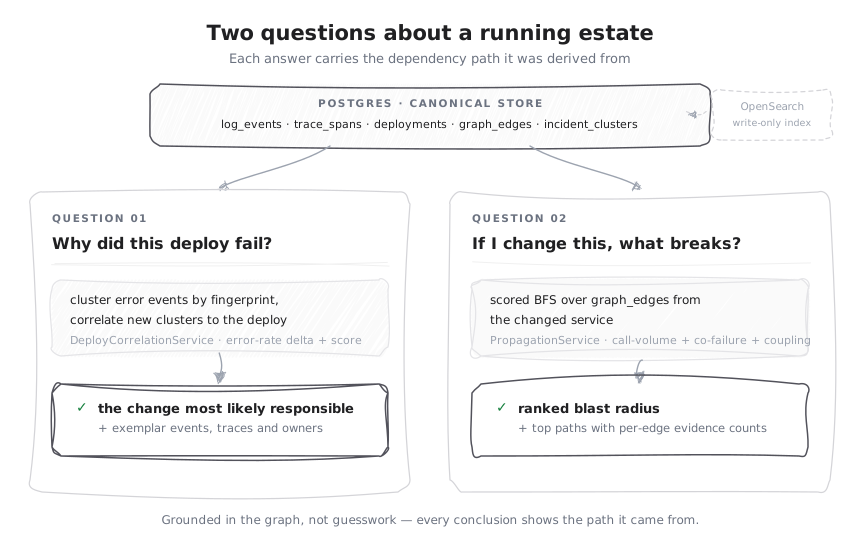
A platform that maps service topology, indexes logs and traces, correlates incidents to deployments, and computes blast radius, giving evidence-grounded answers to 'why did this deploy fail?' and 'what breaks if I change this?'
The Microservice Cognitive Index (MCI) is a platform for making sense of a running microservice estate. It maps service topology, indexes logs and traces, correlates incidents to the deployments that caused them, and computes blast radius, so the answers it gives are grounded in evidence rather than guesswork.
The questions it answers
- "Why did this deployment fail?" By correlating incident signals with recent deploys and the co-failure history across services, MCI points at the change most likely responsible, with the dependency path as evidence.
- "If I change this, what breaks?" By walking the service topology from a proposed change, it computes the blast radius, the set of downstream services that a change can propagate to.
How it is built
MCI runs as a full stack via Docker Compose. Logs, traces, and deploys are normalized into Postgres, the canonical store the queries read from, and an OpenSearch index is written alongside it. Topology and impact are computed from runtime traces combined with incident co-failure history, and every answer carries the explainable dependency path it was derived from, so an on-call engineer can trust and verify the conclusion rather than take it on faith.