Self-Healing Agentic Ops Gateway

A self-healing microservices agent that reasons over telemetry, deploy history, and logs via MCP and remediates production incidents behind an RBAC, ACL, OAuth, and human-approval envelope.
This is a self-healing microservices agent that reasons over telemetry, deploy history, and logs via the Model Context Protocol, and remediates production incidents behind an RBAC, ACL, OAuth, and human-approval security envelope.
The loop
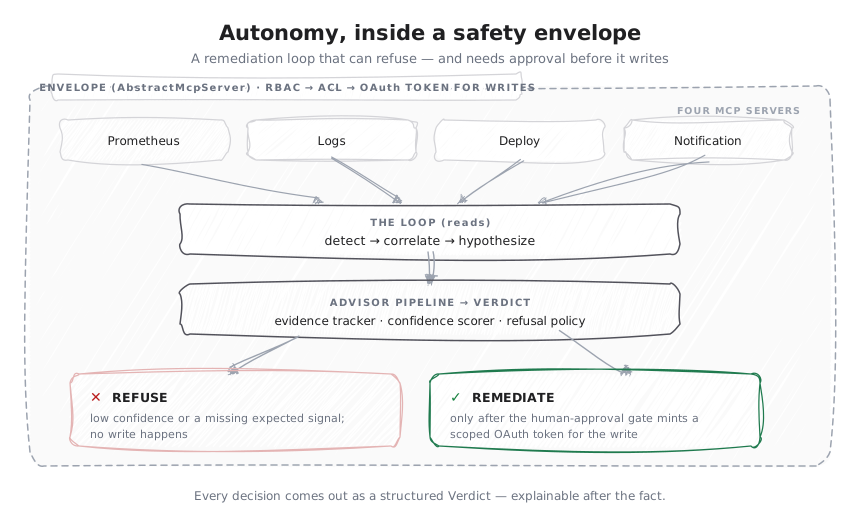
The agent runs a detect, correlate, hypothesize, remediate, verify loop over
four MCP servers: Prometheus, Logs, Deploy, and Notification. An advisor
pipeline decides whether to act at all, made of an evidence tracker, a
confidence scorer, and a refusal policy. Its decision comes out as a structured
Verdict so every remediation is explainable after the fact.
Safety envelope
Autonomy in production only works with hard guardrails. The agent sits behind RBAC, per-tool ACLs, and an OAuth-gated human-approval step, so it can refuse or wait for approval rather than act when confidence is low or the action exceeds its authority. Five runnable scenarios exercise the full system, from the MCP gateway and advisor pipeline through the confidence scoring, refusal policy, and the human-approval path.
Stack
Java 21 with records, sealed types, and pattern matching; MCP for the tool servers; and an optional real-stack mode on Kubernetes (kind) with live observability. The LLM planner is pluggable and only engaged when configured.