Peer-reviewer for GroundLM 2026
Reviewer for GroundLM 2026, the workshop on grounding and retrieval-augmented language models at EMNLP 2026 (Budapest, Hungary).
- RAG
Tag
Everything tagged RAG, most recent first.

7 entries
Reviewer for GroundLM 2026, the workshop on grounding and retrieval-augmented language models at EMNLP 2026 (Budapest, Hungary).
When a document has a structure, stop shredding it. Navigate it.
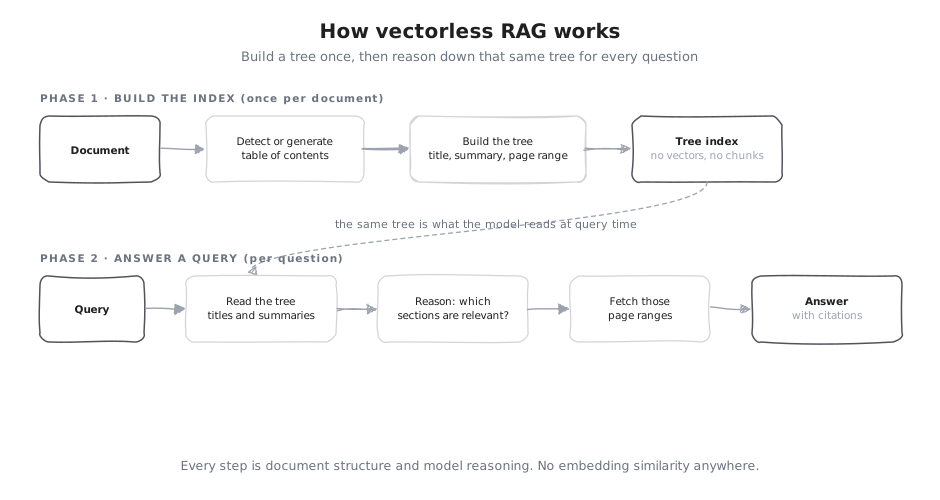
Part six of the RAG series. The default RAG recipe chops a document into chunks, embeds them, and retrieves by vector similarity. For a long, structured document that throws away the one thing that made it readable: its structure. Vectorless RAG keeps the document whole, builds a table-of-contents tree, and has a model reason its way to the right section, the way a human expert uses a table of contents. This covers why similarity is not relevance, how tree-navigation retrieval works, where it fails, when to reach for it, and when plain vector search is still the right tool. With an interactive navigator.
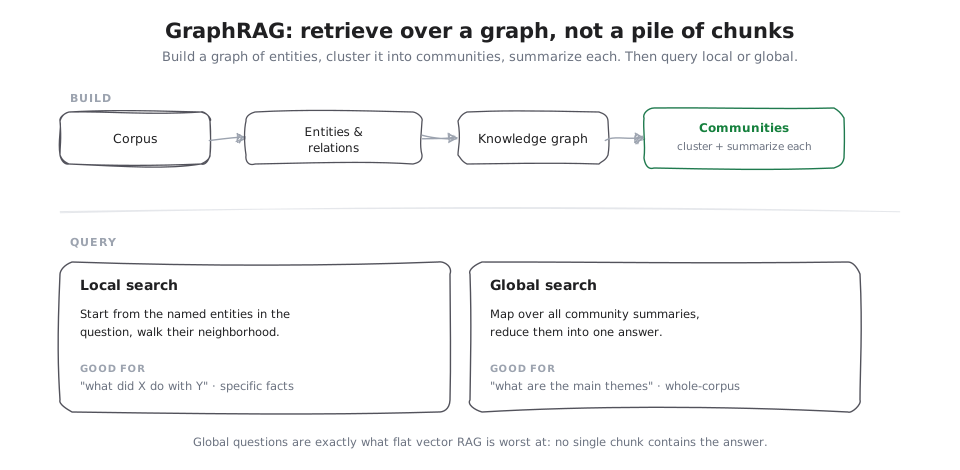
GraphRAG local and global search, the two multimodal strategies, the lineage from RETRO to CAG, each with its own analogy and visualizer.
The last piece of the RAG series: when flat vectors are the wrong shape for the knowledge. GraphRAG with local search and global search as separate ideas, multimodal RAG's two strategies (shared embedding space and translate-to-text), the family tree (RAG-Sequence, RAG-Token, REALM, Fusion-in-Decoder, RETRO, Atlas), the long-context-versus-RAG debate, and cache-augmented generation. Each with an everyday analogy and an interactive visualizer.
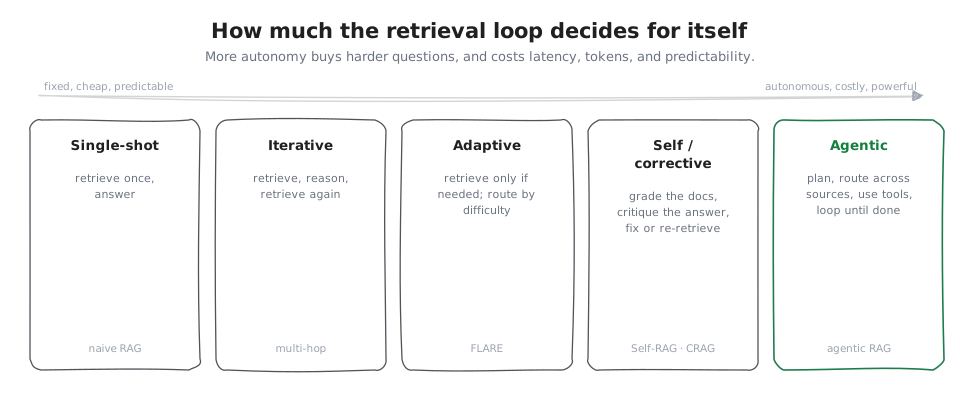
Iterative, adaptive, FLARE, Self-RAG, corrective, speculative, and agentic RAG, each with its own analogy and its own visualizer.
The control-flow axis of RAG, pattern by pattern, each with an everyday analogy and an interactive visualizer: iterative and multi-hop RAG, adaptive RAG, FLARE, Self-RAG, corrective RAG (CRAG), speculative RAG, and agentic RAG. How each adds a loop, and then adds judgment to the loop, and how to stop at the least autonomous pattern that answers your questions.
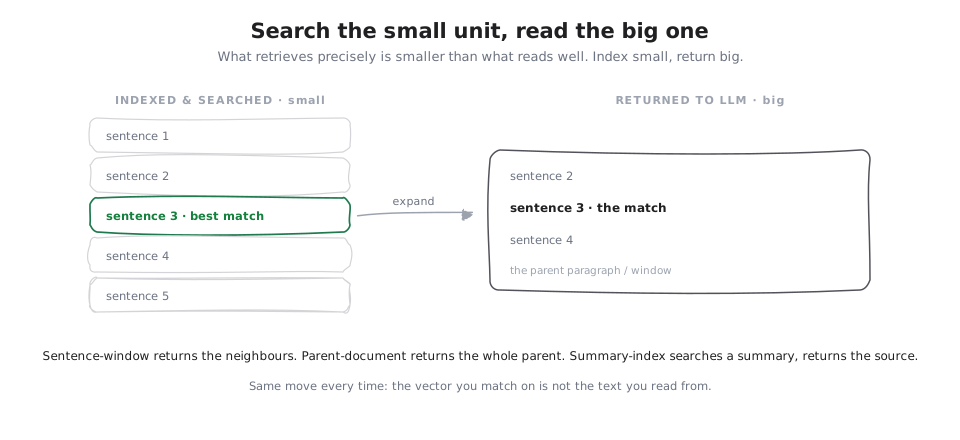
Fixed-size, structure-aware, sentence-window, parent-document, summary indexing, RAPTOR, and late chunking, each with its own analogy and visualizer.
The indexing axis of RAG: why chunking is the quiet make-or-break decision, and the ladder of strategies, each with an everyday analogy and interactive visualizer: fixed-size chunks, structure-aware splitting, sentence-window retrieval, parent-document (small-to-big), summary indexing, RAPTOR's hierarchical tree, and contextual and late chunking. How to decouple the unit you search from the unit you read.
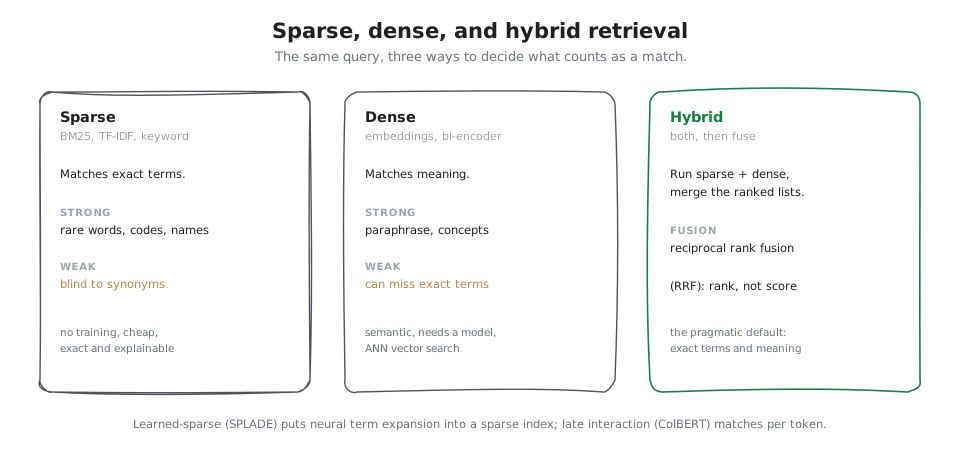
Sparse, dense, hybrid, learned-sparse, late interaction, re-ranking, and contextual retrieval, each with its own analogy and its own visualizer.
The retrieval axis of RAG, method by method: sparse keyword search (BM25), dense embeddings, learned-sparse (SPLADE), late interaction (ColBERT), hybrid fusion with RRF, cross-encoder re-ranking, and contextual retrieval. Each gets an everyday analogy, the real definition, and its own interactive visualizer. How each decides what counts as a match, a worked reciprocal-rank-fusion example, and why real systems combine several.
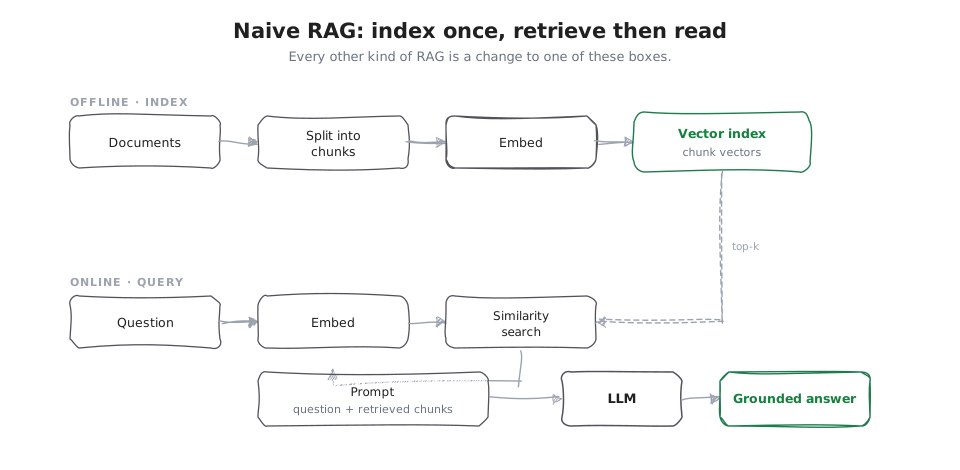
RAG is not one technique. It is a design space, and this is the map of it.
Retrieval-augmented generation started as a single idea and turned into a whole family of designs. This is the opening map: naive RAG, the advanced pre- and post-retrieval tricks, the modular mindset, and the five axes every variant moves along. It anchors a five-part series that walks every kind of RAG.